Explore the guide library · Cabling and fiber
Flexible patch leads and fixed cabling use different constructions; compatible termination hardware matters.
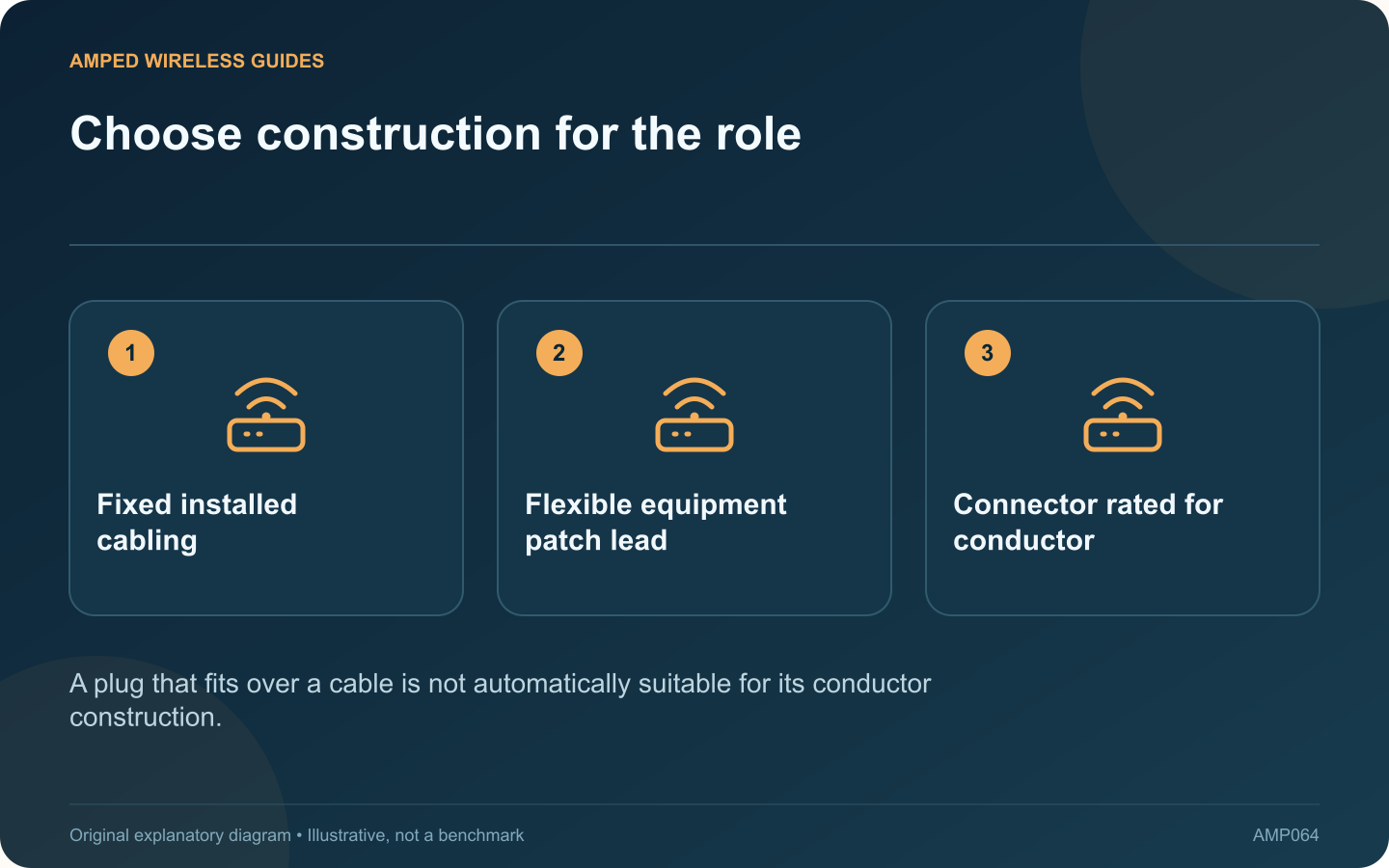
Solid and stranded Ethernet conductors serve different installation needs. Fixed building cabling and a flexible lead moved around a desk are not necessarily best made from the same construction. Fluke Networks explains why conductor design affects flexibility and electrical behavior.
Define the cable’s role
A permanent run is normally installed once and terminated as part of a structured system. An equipment patch cord may bend and move repeatedly. Buy a cable intended for that role rather than choosing solely by jacket color or category number.
Match the termination hardware
Connectors and termination components have specified conductor types and size ranges. A modular plug that appears to fit may not make a reliable connection to the chosen construction. Follow the component manufacturer’s compatibility list and installation method.
Avoid improvised repairs
If a manufactured patch lead is damaged, replacement with a suitable complete lead is often more practical than fitting an unverified plug. For fixed cabling, have the termination corrected and tested with the intended system components.
Inspect mechanical conditions
- No sharp kinks or crushing.
- Strain relief appropriate to the connector.
- Enough slack for ordinary equipment movement.
- No unsupported tension on the wall outlet.
Follow the cable’s bend and pulling limits during installation. Mechanical damage can create a problem that is intermittent rather than an obvious total disconnection.
Verify more than continuity where necessary
A simple wiring test can find some faults, but a permanent link may require qualification or certification. Choose the test according to the promised application and installation requirements.
The decision is not that one conductor style is universally better. It is that cable construction, connector design and physical use need to agree. Keeping those three elements aligned reduces avoidable faults and makes later maintenance easier because the cable can be replaced or reterminated using a clearly documented specification.
Sources and editorial notes
Sources checked 8–9 October 2026. Independent guidance and original illustrations; product comparisons use published specifications rather than hands-on benchmarks. Check the exact model, revision and regional documentation before changing settings.
- Fluke Networks: solid and stranded conductors
- Fluke Networks: verification, qualification and certification