Explore the guide library · Access-point installation
Plan for simultaneous application demand, not just whether a signal reaches every seat.
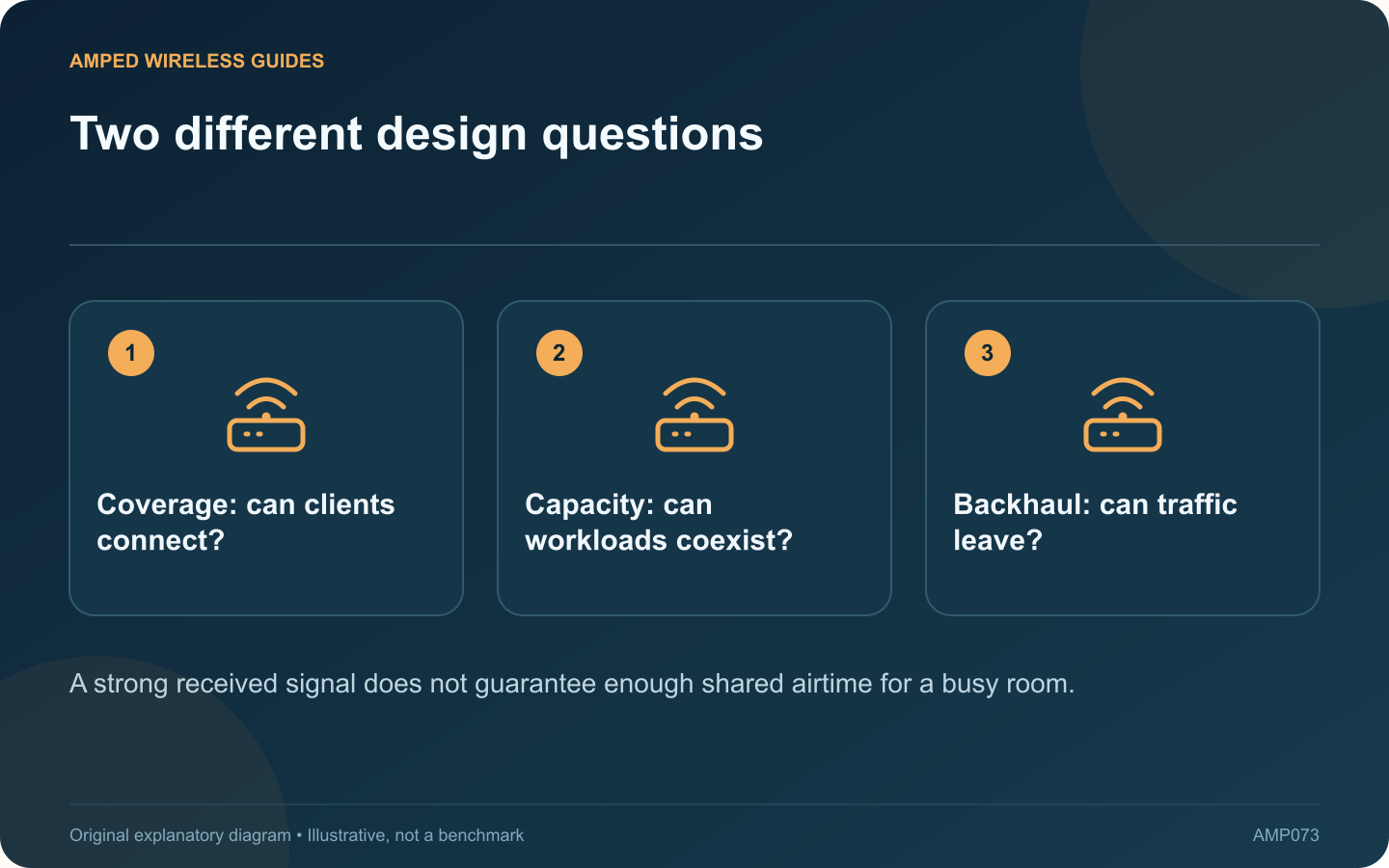
A room can show strong Wi-Fi signal while calls and downloads slow down whenever everyone starts working. Coverage answers whether clients can establish a useful radio connection. Capacity asks whether the shared system can carry their simultaneous workloads.
Count active work, not just devices
A dozen idle phones create a different demand from a dozen laptops joining video meetings or downloading large files. Record the applications, approximate concurrency and times when the problem appears.
Compare quiet and busy periods
Use a representative client in the same position. Check application quality and local network measurements before and during normal busy use. If the difference follows client activity, investigate shared resources rather than assuming the signal is too weak.
Inspect the whole path
- Radio airtime and interference.
- Client capabilities and connection rates.
- Access-point uplink capacity.
- Router and internet-service limits.
Cisco’s high-density design guidance emphasizes planning around actual application demand. Its older numerical examples should not be copied as current universal requirements; use current application guidance and measurements for your own environment.
Avoid adding access points blindly
Additional radios need suitable placement, channel planning and backhaul. Closely packed units on conflicting channels may fail to provide the intended improvement. A larger or business-critical deployment benefits from an experienced wireless designer.
Set an acceptance target
Define a practical outcome such as several concurrent meetings remaining usable while routine background traffic continues. Test that scenario after changes. A single peak speed test in an empty room does not verify the busy-room requirement.
Keep a record of the number and type of active clients during the test. That makes future growth easier to assess and avoids confusing a new workload with a hardware fault. Good coverage remains necessary, but capacity planning determines whether the network stays useful when the room fills up.
Sources and editorial notes
Sources checked 8–9 October 2026. Independent guidance and original illustrations; product comparisons use published specifications rather than hands-on benchmarks. Check the exact model, revision and regional documentation before changing settings.